Match AnalysisFeatured
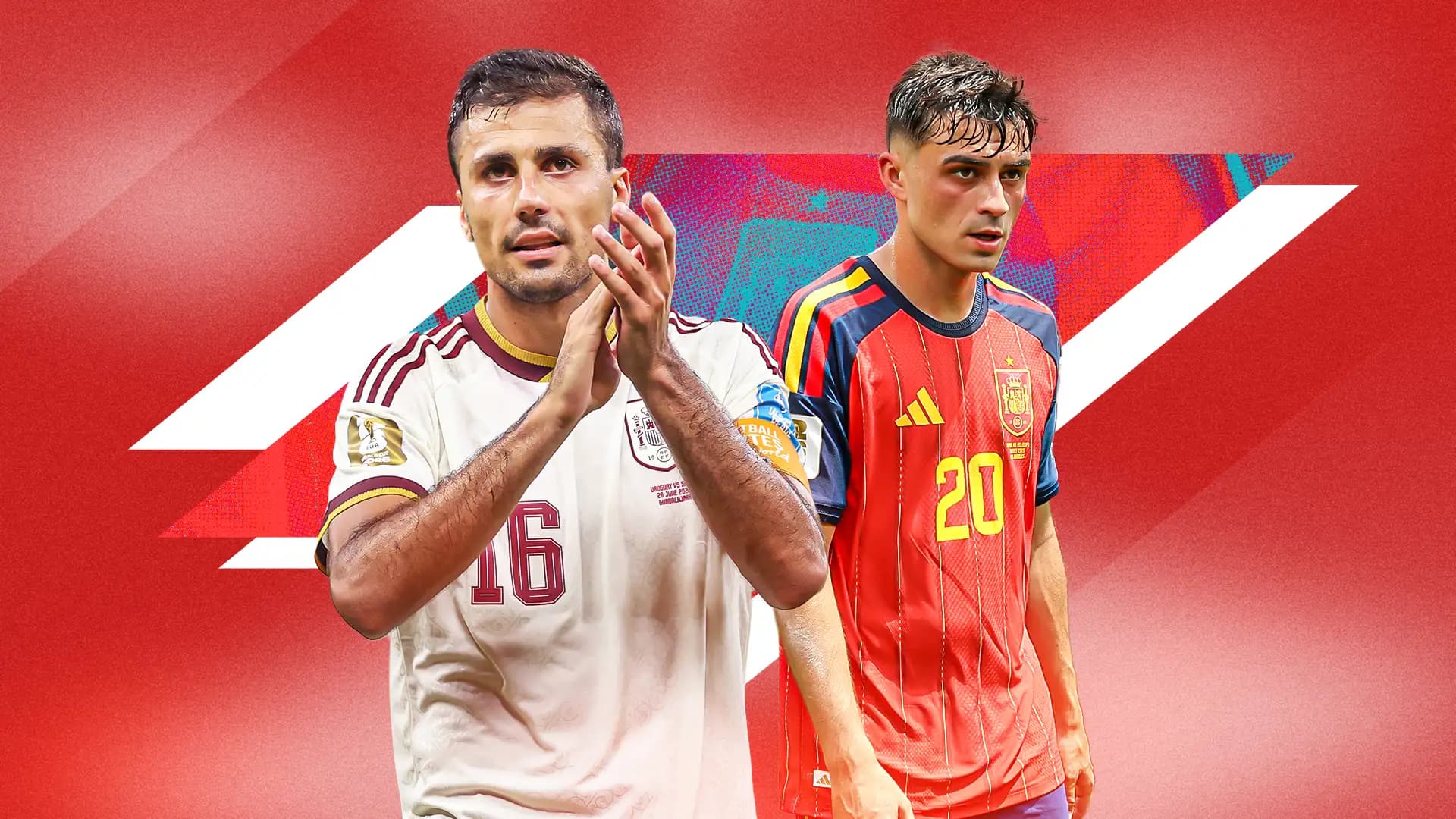
Rodri and Pedri: a complete duo or a conflict of roles in Barcelona? In-depth tactical analysis
August 19, 20268 min readAdmin
Keywords:#Barcelona#Rhodri#Pedri#Spain
Read more football news on TopMatch
Read more football news on TopMatch
The idea of the Manchester City and Spain star's transfer Rodri to Barcelona wide controversy about the possibility of his compatibility with Pedri in the midfield of the Catalan team. After the duo was the focus of many questions about the tactical incompatibility during their experience with the Spanish national team, a fundamental question arises: Can Rodri and Pedri form a complete duo in Barcelona, or will the overlap of their roles create a new tactical problem? This analysis reviews the technical and tactical dimensions of this duo, and provides an in-depth reading of their chances of success together under the leadership of Hansi Flick.
The roots of the controversy over Rodri and Pedri's incompatibility go back to the last World Cup, where Rodri was the main pillar in the Spanish national team's midfield, as he is the player who receives the ball from the defenders, sets the pace of play, and protects the team from rebounds with his smart positioning. On the other hand, Pedri did not perform at his best in that tournament, which raised questions about the possibility of them playing together.
As the World Cup progressed, the coach preferred De La Fuente to rely on Fabian Ruiz andDani Olmo along with Rodri, as analysts felt that Fabian Ruiz was "best suited" to play alongside Rodri, because Ruiz He moves vertically, breaks into the penalty area, shoots, and applies physical pressure, while Pedri tends to go down to late areas to receive the ball and build the attack, which made him almost in the same areas as Rodri, which created an overlap in Roles.
But was this tactical failure due to the presence of Rodri himself, or due to the tactical context imposed by the coach? This is the question that needs a precise answer.
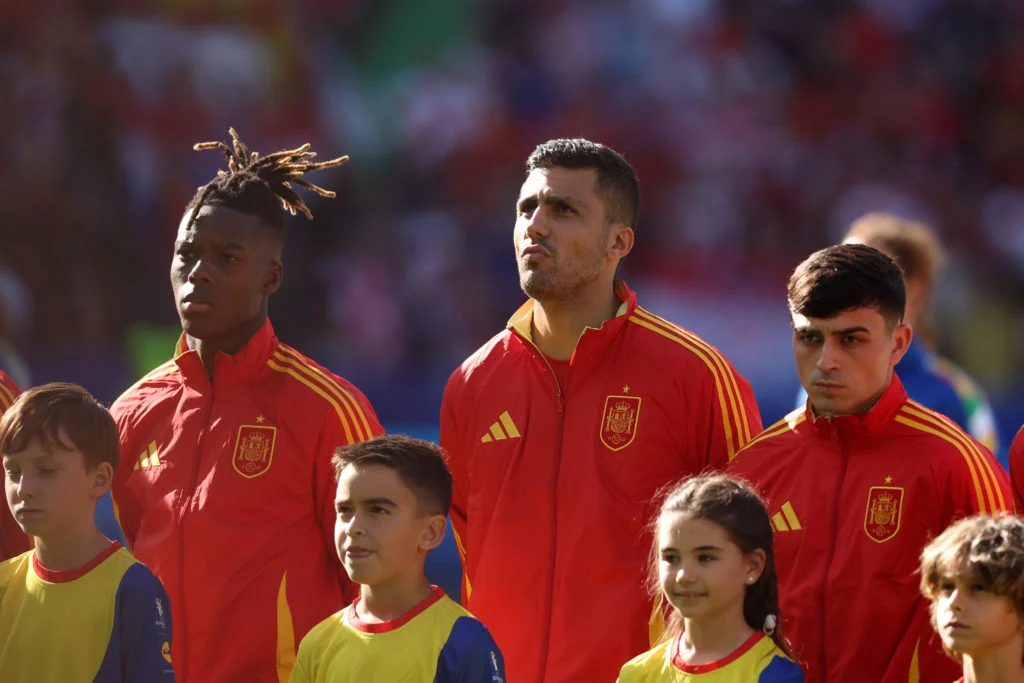
To understand the possibility of the duo's chemistry, we must first break down their respective roles on the pitch. Rodri is the clear anchor, or what can be described as the “brain of the team” who stands in front of the centre-backs. His main value lies in organizing the game, as he exposes the entire field, opens up passing angles, and sets the tone of the match. Most important is his proactive defensive role, as he is always in the right place before the ball is lost, making him the first line of defense against rebounds.
On the other hand, Pedri is not a centerpiece, rather he is a modern number 8 who thrives when he moves between the lines. His true strength appears in receiving the ball under pressure, turning with the ball, and switching from defensive to offensive in the final third of the field. He is the player who receives the ball fromRodri after crossing the first pressure line and passes it to the attackers.
This clear distribution of tasks means that Rodri andPedry are not in conflict over the same territory, but rather complement each other. While Rodri builds the “ground” on which the team stands, Pedry transforms this stability into attacking solutions. Having a player of the quality of Rodri will free Pedri from the exhausting defensive responsibilities he previously had at Barcelona, such as having to go down to support the centre-backs in the build-up, and he will be able to position himself in areas 10 to 15 meters higher, which makes him more dangerous. In the area where he is good at making a difference.
Many followers ignore the fact that Rodri andPedry played together as starters in crucial matches in the 2024 European Championship, such as the matches between Croatia and Italy, They performed amazingly in controlling the midfield and imposing the pace of the match. This success was not a coincidence, but rather was linked to the presence of a third player with completely different characteristics, namely Fabian Ruiz, who played the role the team needed in attacking spaces and breaking into the penalty area.
As for the 2026 World Cup, the decline in the level of Pedry was not evidence of his lack of harmony with Rodri, but rather due to two main reasons: The first is that That Pedry was going through a period of decline in physical and mental performance during that period, and the second is that the team needed more direct solutions to deal with teams defending in large groups, which was provided by Fabian Ruiz andDani ulmo more effectively in those circumstances.
Attempting to project the national team's experience onto Barcelona is a grave tactical mistake, because the context is completely different. The Spanish national team relies on calm control and circulating the ball for long periods, due to the absence of a clear striker capable of deciding chances on his own, which imposes additional offensive roles on the midfielders. On the other hand, Barcelona has a more dynamic attacking system with direct wingers such as Lamine Yamal andRafinha, which reduces the need for Pedry to transform into a player who enters the box. constantly, allowing him to focus on his primary job of connecting and creating.
Hansi Flick also applies a style that relies on a very advanced defensive line, which gives the team fierce pressure in the opponent's half of the field, and here the importance of Rodri strategy emerges as a "safety valve" thanks to his defensive reading that precedes losing the ball, which allows Pedri by staying in more advanced areas instead of constantly returning to defensive support.
The fundamental tactical issue is not the harmony of Rodri andPedry per se, but rather the identity of the third player who should complete this duo. Relying on a third player who has the same characteristics will lead to a slow pace of play and crowding of players in narrow areas. Therefore, Barcelona needs a player with dynamic characteristics and physical aggression.
There are several options offered to the third player, each of which has its advantages depending on the nature of the match:
Javi He is the ideal choice in big matches, because he possesses the necessary aggression and physical drive, as he undertakes the task of pressing, chasing the ball, and covering the spaces left by others, which prevents Barcelona's midfield from becoming "soft" or weak in tackles.
Fermin Lopez He represents the ideal option for teams that defend with a low block, as he is the player who always has a desire to break into the penalty area and move behind the attackers, which gives the team direct attacking solutions.
As for Dani Olmo he is considered an excellent attacking option, but using him as a third player may make the team more offensive than necessary, which imposes greater defensive responsibilities on the full-backs and reduces the solidity of the midfield.
In the end, it seems that the argument about the lack of harmony between Rodri andPedry is a gross exaggeration resulting from a superficial reading of the Spanish national team's experience. The truth is that the two have complementary roles, not opposites, and that their success together in Barcelona depends mainly on distributing tasks correctly and choosing the appropriate third player according to the nature of the match and the opponent.
With a coach of the caliber of Hansi Flick, who has enough time to develop details and define precise roles for each player, it seems that Barcelona is capable of creating a balanced midfield that combines defensive stability. For Rodri, the creativity in passing for Pedry, and the offensive ferocity that the third player will provide. The most important question remains: Will Flick be able to achieve this balance, and will the duo of Rodri and Pedri be the key to Barcelona’s return to the podiums locally and continentally? The coming days alone will be enough to answer.